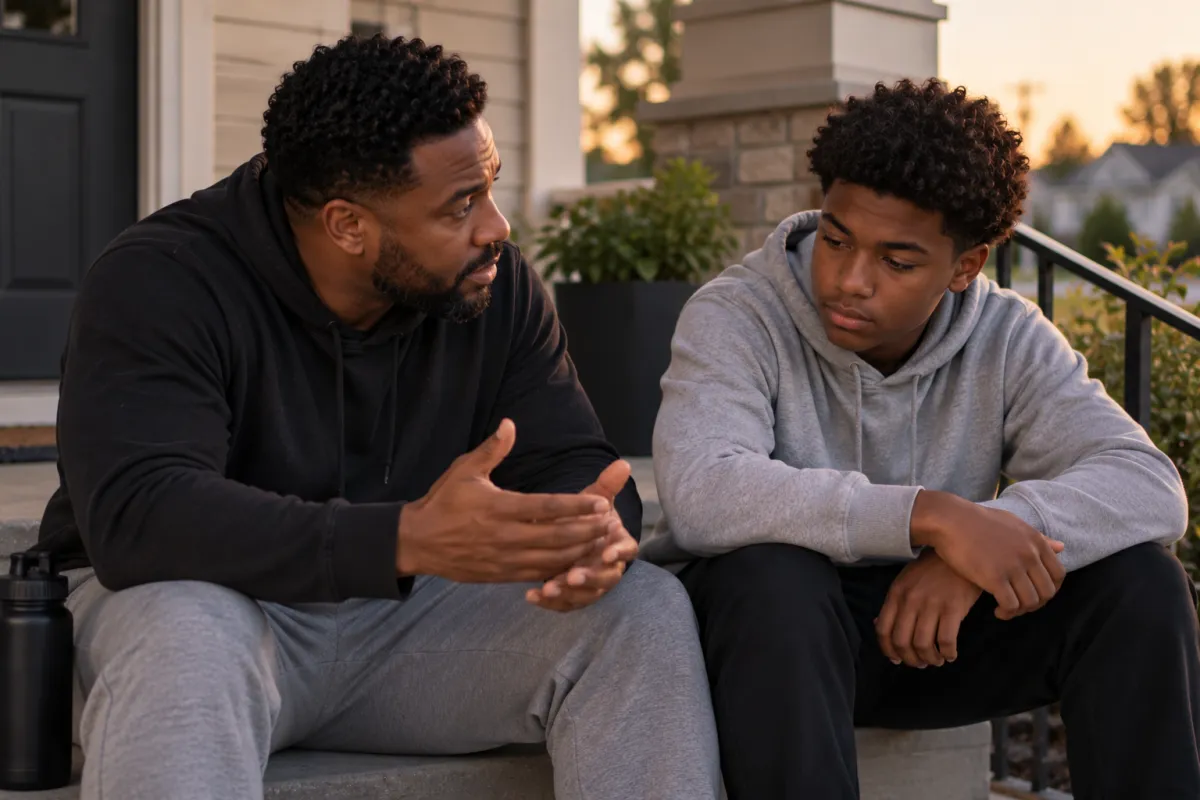
How to bring up therapy without your teen shutting down
Most parents have some version of this conversation planned before they have it, and most of those plans involve sitting down together at a chosen moment.
That is usually the least effective format available.
What tends to work
Low stakes and side on. In the car, on a walk, doing something with your hands. Anywhere neither of you has to hold eye contact. Teenagers say considerably more when they are not being looked at, and a conversation that can be abandoned without ceremony is easier to enter.
Naming what you noticed, without the conclusion attached.There is a large difference between saying you have seen they seem tired and low lately and asking how they are doing, and saying you think something is wrong with them. The first invites a response. The second requires a defence.
Being honest that you are out of your depth.Saying you are worried and do not know what would help is often easier to hear than confident certainty about what they are feeling. It also happens to be true, which teenagers detect reliably.
What tends to close it down
Making it a verdict. Anything that arrives as a diagnosis, even a kind one, puts them in the position of agreeing to a label.
Asking in front of siblings, which turns it into a performance.
Pushing when they say not now. The impulse is understandable, because you finally raised it and stopping feels like losing the chance. Pushing costs you the next attempt.
And framing therapy as a consequence. If it sounds like a punishment for behaviour, or like something being done to fix them, they will treat it as one.
Expect the first attempt to go nowhere
This is the part worth preparing for. You will often get a shrug, a flat I am fine, and nothing else.
That is a normal outcome and not a failure. Teenagers frequently say nothing in the moment and then return to it days later, in a different setting, usually when you are occupied with something else. Which is why leaving the door open matters more than the single conversation going well.
Say the thing, let it sit, and be available. The second and third openings do more work than the first.
If they refuse outright
Some teenagers will say no, clearly. You can still speak to a clinician yourself, about what you are seeing and what might help. A first call is with the parent anyway, and getting guidance on how to approach it is a legitimate reason to make one, even if your child never attends.
More on how we work with teenagers and their families is on our page for parents.
If you want to talk to someone
We are a virtual practice licensed in Texas and Colorado, and we keep a waitlist rather than open booking. Joining takes a few details, the first call is free, and nothing is committed at the end of it. Get on the waitlist.
This article is general information, not medical advice, and reading it does not create a clinical relationship. If you are in crisis or thinking about harming yourself, call or text 988 for the Suicide and Crisis Lifeline, any time. If someone's safety is at immediate risk, call 911.